
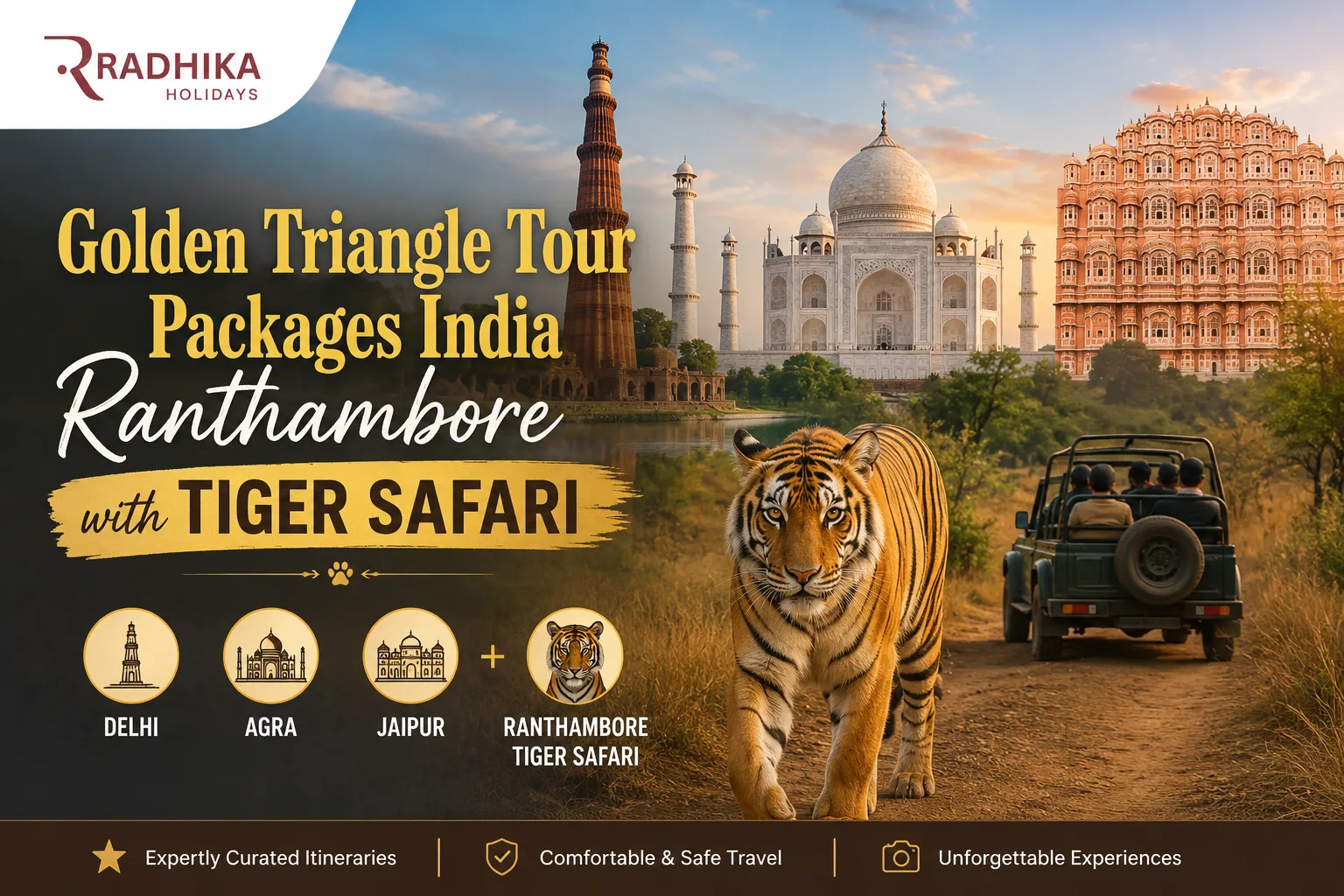
Golden Triangle Tour Packages India Ranthambore With Tiger Safari is a classic North India itinerary that combines Delhi, Agra, and Jaipur with wildlife adventures in Ranthambore National Park. It is popular with international travelers because it blends UNESCO-style heritage, royal architecture, and a real chance to see Bengal tigers in the wild in one trip. The tiger safari experience is special because it turns a cultural holiday into a memorable wildlife journey, adding excitement, nature, and a completely different pace to the tour.
What is the Golden Triangle Tour with Ranthambore?
The Golden Triangle Tour with Ranthambore is an extended version of the standard Delhi-Agra-Jaipur route, with one or two nights in Ranthambore National Park. The itinerary usually includes Delhi’s old and new landmarks, the Taj Mahal and Agra Fort, the abandoned Mughal city of Fatehpur Sikri, tiger safaris in Ranthambore, and Jaipur’s palaces and observatories.
This route works especially well for first-time visitors to India because it covers the country’s most famous historical cities plus a premium wildlife destination without requiring a complicated multi-region trip. Many operators offer private cars, guided sightseeing, and hotel categories from standard to luxury, which makes the journey flexible for different travel styles.
Why Add Ranthambore National Park?
Ranthambore adds contrast, energy, and a strong wildlife angle to the Golden Triangle Tour India experience. Instead of only palaces, forts, and monuments, travelers get a jungle setting, early-morning safaris, birdlife, marshes, and the possibility of seeing tigers in their natural habitat.
It is also one of the easiest tiger reserves to combine with the classic Rajasthan route, which makes the Golden Triangle Wildlife Tour India a practical choice. For many visitors, this balance of culture and safari is the biggest reason the itinerary feels more complete than a standard city-only tour.
Complete Itinerary
Below is a polished 8-day version of the Delhi Agra Jaipur Ranthambore Tour designed for international travelers who want a comfortable pace, strong sightseeing, and two safari chances.
Day 1: Arrival in Delhi
Arrive in Delhi, meet your driver or representative, and transfer to your hotel. If time allows, use the rest of the day for light sightseeing, a market walk, or recovery from your international flight.
Delhi is best treated as the soft landing point of the trip because the city is large, busy, and rich in contrasts. Most private tour packages begin here because Delhi has the best international connectivity in North India.
Day 2: Delhi Sightseeing
Spend the day exploring Old and New Delhi. Typical highlights include major heritage sites, colonial avenues, busy bazaars, and food streets.
This day gives travelers their first real cultural contrast: Mughal history, British-era planning, and modern Indian city life in one place. A private guide is useful here because the city’s history is layered and best understood with context.
Day 3: Delhi to Agra
Drive to Agra and visit the Taj Mahal and Agra Fort. This is one of the most important days of the entire route because it covers India’s most recognized monument and one of its strongest Mughal forts.japjitravel+2
Many itineraries also recommend an early arrival so you can enjoy the Taj Mahal in softer light and avoid the strongest crowds. Friday closure rules for the Taj Mahal should always be checked before travel because schedules can affect the route.
Day 4: Agra to Ranthambore via Fatehpur Sikri
Leave Agra after breakfast and visit Fatehpur Sikri en route to Ranthambore. This adds depth to the journey because Fatehpur Sikri is one of the finest preserved examples of Mughal planning and imperial ambition.japjitravel+1
Continue to Ranthambore for an overnight stay near the park. This is usually where the tour mood changes from heritage sightseeing to safari anticipation, which is one reason travelers remember this itinerary so strongly.
Day 5: Morning and Evening Tiger Safari
Take an early safari in Ranthambore National Park, then rest during the day and go for a second safari in the afternoon or evening depending on seasonal schedule. Most package structures include two safari opportunities to improve the chance of spotting wildlife.
This day is the emotional center of the trip. Even when a tiger is not sighted, the landscapes, alarm calls, birdlife, deer, and old ruins inside the park make the experience feel immersive and unique.
Day 6: Ranthambore to Jaipur
Depart for Jaipur after breakfast and check in to your hotel. Jaipur gives the tour its royal Rajasthani finish, with forts, palaces, observatories, and colorful architecture.
This transfer day is usually less rushed, which helps after the early safari start. Many travelers appreciate that the tour shifts from wilderness to heritage again without feeling repetitive.
Day 7: Jaipur Sightseeing
Visit Amber Fort, City Palace, Hawa Mahal, and Jantar Mantar, then enjoy shopping or a cultural evening in the Pink City. Jaipur is the right place to end the trip because it adds royal grandeur and strong photography opportunities.
The city is especially popular with international visitors because it combines easy sightseeing, good hotel choices, and a visibly distinctive architectural style. It also gives the itinerary a colorful finale.
Day 8: Departure
After breakfast, transfer to Delhi or proceed to the airport depending on your flight plan. Some travelers prefer to depart from Jaipur, while others return to Delhi for better international flight options.
If time allows, use the final hours for shopping or a relaxed lunch. After eight days of movement, most travelers welcome a slower final morning.
Major Attractions Covered
The strength of this itinerary is that every major stop has its own personality. Delhi shows political and cultural scale, Agra brings Mughal romance, Ranthambore adds wilderness, and Jaipur closes the trip with royal Rajput identity.
Taj Mahal
The Taj Mahal is a 17th-century Mughal mausoleum built by Emperor Shah Jahan as a memorial to Mumtaz Mahal. It is one of India’s most visited monuments and remains the emotional centerpiece of the Golden Triangle Tour India route.
Visitor highlights include sunrise viewing, marble detailing, and symmetrical garden design. The best photography spots are the main gateway, the reflecting pool axis, and side angles that frame the dome without heavy crowds.
Travel tips: arrive early, carry your passport, and expect airport-style security. Friday closure planning matters because the Taj Mahal does not open every day in the same way.
Agra Fort
Agra Fort is a major Mughal stronghold that also served as a royal residence. It reflects military strength, imperial luxury, and the shifting history of the Mughal court.
Visitor highlights include the grand gates, palace-style interiors, and views toward the Yamuna area. The best photography spots are the main entrance, open courtyards, and fort walls with layered red sandstone textures.
Travel tips: wear comfortable shoes, allow enough time for walking, and visit with a guide if possible. The site is large enough that rushed visits feel unsatisfying.
Fatehpur Sikri
Fatehpur Sikri was built by Emperor Akbar and later abandoned, which gives it a rare “frozen in time” atmosphere. It is one of the most important heritage stops between Agra and Ranthambore.
Visitor highlights include the Buland Darwaza, courtyard planning, and the historic mixture of religious and political significance. The best photography spots are the monumental gate, wide courtyards, and elevated angles showing the red sandstone complex.
Travel tips: keep extra water, expect some walking, and plan enough time because the site is larger than many first-time visitors expect. A guide makes the meaning of the buildings much clearer.
Ranthambore National Park
Ranthambore National Park is one of India’s best-known tiger reserves and the wildlife anchor of this itinerary. Its ruined forts, dry forest, lakes, and open terrain make it one of the more photogenic safari landscapes in the country.
Visitor highlights include the possibility of tiger sightings, deer, sambar, marsh crocodiles, sloth bears, leopards, and rich birdlife. The best photography spots are usually zone-specific water bodies, open tracks, and areas with ruins or reflective lakes in the frame.
Travel tips: book safaris in advance, follow park rules carefully, and dress in muted colors. Because wildlife movement changes by season and zone, no safari can guarantee a tiger sighting.
Amber Fort
Amber Fort is one of Jaipur’s most famous hill forts and a classic Rajput monument. It represents military strategy, royal elegance, and the blended artistry of Rajasthan’s court culture.
Visitor highlights include courtyards, mirrored halls, gateways, and elevated views of the surrounding landscape. The best photography spots are the fort ramparts, outer approach road, and palace courtyards.
Travel tips: go early to avoid heat and congestion, and consider how much walking is involved. Comfortable footwear matters because the site is broad and uneven in places.
City Palace Jaipur
City Palace is still one of Jaipur’s most important royal complexes. It shows how the city’s ruling family lived, governed, and displayed status through architecture and ceremonial space.
Visitor highlights include museum displays, courtyards, and ornate gateways. The best photography spots are the decorated doors, internal courtyards, and exterior sections that show royal color and symmetry.
Travel tips: photography rules may vary by section, so check signage. A guided visit helps you understand the different uses of the palace spaces.
Hawa Mahal
Hawa Mahal, the “Palace of Winds,” is Jaipur’s most iconic facade. Its layered jharokhas were designed to allow royal women to observe street life while remaining unseen.
Visitor highlights include the honeycomb exterior, city views, and the visual identity it gives Jaipur. The best photography spots are from across the street, from rooftop cafes, and from nearby elevated viewpoints.
Travel tips: the exterior is the most famous part, so many travelers spend less time inside than expected. Go when the light is softer for better photography.
Jantar Mantar
Jantar Mantar is a UNESCO-recognized astronomical observatory with large stone instruments. It demonstrates the scientific ambition of Jaipur’s royal era and remains one of the most distinctive stops in the city.
Visitor highlights include giant sundials and geometric instruments built for measuring time and celestial movement. The best photography spots are the open instrument spaces and wide-angle shots that show scale.
Travel tips: a guide adds major value here because the instruments are hard to understand without explanation. It is one of the most educational sites in the whole itinerary.
Ranthambore Safari Experience
The Ranthambore Tiger Safari Tour is the part of the itinerary that creates the most excitement. Safaris are usually done by jeep or canter, and tour packages often include morning and evening options to maximize animal-spotting opportunities.
Safari Zones
Ranthambore is divided into safari zones, and different zones may have different access patterns, landscapes, and wildlife movement. Some zones are more water-rich, some are more open, and some are known for stronger tiger activity in certain seasons.
Travelers should not assume one “best” zone guarantees a tiger. Wildlife is always dynamic, and guides track fresh signs, calls, and movement to increase the odds of a good experience.
Types of Safaris
The two common safari formats are jeep safari and canter safari. Jeep safaris are smaller and usually feel more private, while canters carry more passengers and are often more budget-friendly.
Private and premium packages may also combine guides, hotel upgrades, and chauffeur-driven transfers. That makes the safari smoother for international travelers who want comfort without sacrificing the adventure.
Chances of Spotting Tigers
Tiger sightings are possible, but never guaranteed. Your chances improve with two safaris, a knowledgeable driver-guide, the right season, and patience in the field.
Travelers should treat a tiger sighting as a bonus, not a promise. The overall safari experience is still worthwhile because Ranthambore has strong scenic value and diverse wildlife.
Other Wildlife
Besides tigers, visitors may see leopards, striped hyenas, sloth bears, jackals, sambar deer, spotted deer, marsh crocodiles, and many bird species. This broader wildlife mix helps ensure that even a quiet safari feels rewarding.
That is one reason the park works well in an international itinerary: it offers a classic Indian jungle experience, not just a single-animal chase.
Best Safari Timings
Morning safaris are usually the best for active animal movement and cooler temperatures. Evening safaris can also be excellent, especially in warmer months when animals move toward water later in the day.
The best schedule often depends on season, light, and park timing. Early departures are common, so travelers should expect a very different rhythm from city sightseeing.
Best Safari Gates
Safari entry points depend on the assigned zone and official park planning. Rather than fixating on one gate, travelers should focus on booking early, choosing a trusted operator, and understanding which zone they receive.
A good tour planner will explain the zone, gate, and pickup timing before the safari day. That is especially useful for first-time visitors who want logistics handled cleanly.
Photography Opportunities
Ranthambore offers some of the best wildlife photography conditions in North India because of its relatively open terrain and scenic ruins. Early light, reflective water, and dramatic backdrops create strong image opportunities.
Use a zoom lens if possible, keep your camera silent, and avoid sudden movement. Safari photography is often as much about patience as about equipment.
Best Time to Visit
The best time to do the Golden Triangle Tour with Ranthambore is generally from October to April, when sightseeing conditions are more comfortable and safari logistics are easier. Hotter months can still be excellent for tiger sightings, but city travel becomes more demanding.
-
January to February: Cool, pleasant, and ideal for long sightseeing days.
-
March: Excellent balance of weather and safari potential.
-
April to June: Hot, but stronger chances around water sources for wildlife viewing.
-
July to September: Monsoon season, with lush scenery but more limited or seasonal safari access depending on park operations.
-
October to December: Very popular because the weather is comfortable and the full route feels polished.
For most international travelers, November to March is the most comfortable window. If wildlife is the top priority, late summer conditions may be worth considering despite the heat.
Luxury Travel Option
A Luxury Golden Triangle Tour with Tiger Safari is ideal for travelers who want comfort, privacy, and smoother logistics. Luxury versions usually include 5-star or heritage hotels, private guides, premium vehicles, and a more curated safari experience.
Luxury hotels in Delhi, Agra, Ranthambore, and Jaipur often improve the whole trip by reducing fatigue between long travel days. Chauffeur-driven transport is especially valuable on this route because it removes the stress of trains, transfers, and multiple bookings.
Premium safari experiences can include better-arranged vehicles, early coordination, and stronger operator support. While no luxury package can guarantee a tiger, it can make the overall experience far more seamless.
How to Reach Ranthambore
Ranthambore is usually reached by road or rail as part of a larger North India circuit. The most practical access points for this itinerary are Delhi, Agra, and Jaipur.
From Delhi
Delhi to Ranthambore is commonly done by private car with an overnight stop pattern in Agra or Jaipur, or by train depending on the package design. A private transfer is the easiest option for international visitors on a packaged tour.
From Agra
Agra to Ranthambore is a classic overland transfer that often includes Fatehpur Sikri en route. This is one of the most natural connections in the Golden Triangle Rajasthan Tour because the heritage route flows directly into the wildlife segment.
From Jaipur
Jaipur to Ranthambore is one of the shortest and most convenient legs. Many itineraries place Ranthambore before Jaipur or after Jaipur depending on total duration and safari availability.
Price Guide
The cost of a Golden Triangle Tour Packages India Ranthambore with Tiger Safari depends on hotel class, transport, safari inclusion, and guide services. Private tours with safaris and branded hotel stays are generally more expensive than standard city-only packages.
Prices vary by season, hotel availability, and whether monument fees, meals, and internal transfers are included. The most transparent operators clearly separate inclusions from exclusions, which helps international travelers compare value accurately.
Comparison Table
The wildlife version is better for travelers who want variety and a stronger sense of adventure. The standard route is still excellent, but the Ranthambore add-on gives the itinerary more depth and uniqueness.
Pros and Cons
Pros
-
Combines India’s top heritage circuit with a wildlife destination.
-
Great for first-time visitors who want one well-planned itinerary.
-
Excellent for photography, especially in Jaipur and Ranthambore.
-
Works well in private or luxury formats.
-
Offers a richer experience than a city-only Golden Triangle trip.
Cons
-
Travel days can be long.
-
Tiger sightings are never guaranteed.
-
Safari timings require early mornings and advance planning.
-
Summer heat can be intense in North India.
-
Premium safaris and luxury hotels can raise the total cost.
Who Should Choose This Tour?
This tour is ideal for first-time visitors to India who want a balanced mix of culture, history, and wildlife. It is also a strong choice for couples, families, photographers, and small private groups who want a memorable North India itinerary without overcomplicating the route.
It suits travelers who enjoy organized travel, private drivers, and hotel comfort while still wanting a touch of adventure. If someone wants both the Taj Mahal and a tiger safari in one trip, this is one of the best combinations available.
Travel Tips for International Tourists
International travelers should check visa requirements well in advance because India’s entry rules depend on nationality and passport type. Most visitors also prefer a private chauffeur-driven tour because it reduces confusion and makes intercity travel much easier.
Carry Indian rupees for small purchases, tips, and local shopping, even if hotels and tour companies accept cards. Modest clothing is recommended for temples, heritage sites, and rural areas, and comfortable walking shoes are essential.
Health and safety are mostly about preparation: drink bottled or filtered water, use sun protection, keep some cash handy, and follow park instructions during safari. For wildlife visits, listen closely to your guide and never ask drivers to rush, crowd, or chase animals.
FAQs
1. What is the Golden Triangle Tour with Ranthambore?
It is an India tour that combines Delhi, Agra, Jaipur, and Ranthambore National Park for sightseeing plus tiger safaris.
2. How many days are enough for this tour?
Eight days is a very balanced option, though some travelers choose 6 or 7 nights depending on pace and hotel style.
3. Is Ranthambore good for tiger sightings?
Yes, but sightings are never guaranteed. Two safaris improve the chance of seeing tigers or other wildlife.
4. What is the best month to visit?
November to March is usually the most comfortable for heritage sightseeing, while hotter months may offer stronger wildlife movement near water.
5. Which cities are included in the tour?
Most itineraries include Delhi, Agra, Ranthambore, and Jaipur.
6. Is this tour suitable for families?
Yes, especially private tours with good hotels and a slower pace. Safari days should be planned carefully for children.
7. Can I do this tour in luxury style?
Yes. Luxury packages usually include 5-star hotels, private transportation, and premium safari support.
8. Are safaris included in the package?
Many packages include one or two safaris, but you should always confirm the exact inclusions before booking.
9. What wildlife can I see in Ranthambore?
Besides tigers, you may see leopards, sloth bears, deer, crocodiles, and many bird species.
10. Is the Taj Mahal always open?
No. The Taj Mahal has a Friday closure pattern, so travel timing should be checked carefully.
11. Do I need a guide?
A guide is strongly recommended for Delhi, Agra, Jaipur, and Fatehpur Sikri because it improves understanding and efficiency.
12. Is this tour better by private car or train?
Private car is usually easier and more comfortable for international travelers on a multi-city itinerary.
13. How far is Ranthambore from Jaipur?
It is one of the easier transfer legs in the route, which is why Jaipur and Ranthambore pair well together in packaged tours.
14. What should I wear on safari?
Neutral colors, closed shoes, and light layers are best. Avoid bright clothing and strong perfumes.
15. Is this tour worth it?
Yes, because it combines India’s most famous heritage route with a major wildlife experience in one seamless trip.
Conclusion
The Golden Triangle Tour Packages India Ranthambore with Tiger Safari is one of the most rewarding ways to experience North India because it combines world-famous monuments, royal Rajasthan, and a genuine wildlife adventure in one itinerary. For travelers who want more than a standard sightseeing loop, this route delivers variety, comfort, and strong storytelling value from beginning to end. For a smoother, richer, and more memorable India holiday, booking a well-planned Luxury Golden Triangle Tour Pakages with Ranthambore is a smart choice.