
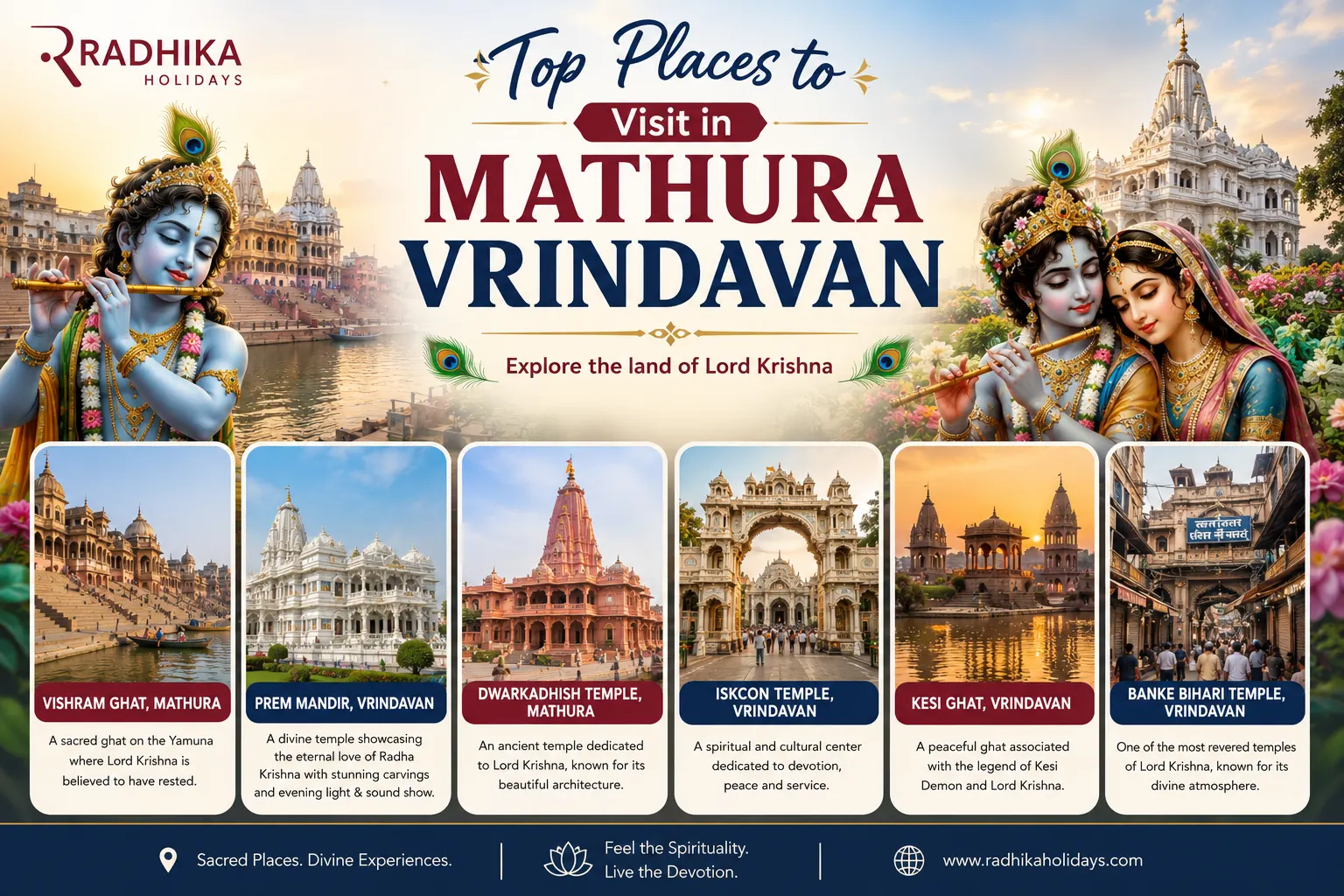
Mathura and Vrindavan are among India's most sacred pilgrimage destinations, revered as the birthplace and childhood playground of Lord Krishna. These twin cities in Uttar Pradesh's Braj region attract millions of devotees, spiritual seekers, and cultural tourists annually, offering an unforgettable blend of ancient temples, holy ghats, mystical forests, and vibrant festivals. Whether you're planning a spiritual journey, a family trip, or seeking to immerse yourself in Krishna bhakti traditions, this comprehensive guide covers the best places to visit in Mathura Vrindavan with practical information on timings, entry fees, history, and travel tips.
Why Visit Mathura and Vrindavan?
Mathura and Vrindavan hold unparalleled significance in Hindu mythology and Vaishnavite tradition. Mathura is celebrated as the birthplace of Lord Krishna, where he was born in a prison cell to Devaki and Vasudeva before being carried across the Yamuna to Gokul. Vrindavan, located about 15 kilometers from Mathura, is where Krishna spent his enchanting childhood, performing divine leelas (miracles) with the gopis and Radha.
The region's spiritual atmosphere, combined with stunning temple architecture, serene ghats along the Yamuna River, and the legendary Braj parikrama (sacred circuit), makes it a top destination for religious tourism in India. Beyond temples, visitors can explore ancient forts, museums, sacred water tanks (kunds), and participate in vibrant festivals like Lathmar Holi and Janmashtami.
Top Places to Visit in Mathura
[caption id="attachment_851" align="alignnone" width="1402"]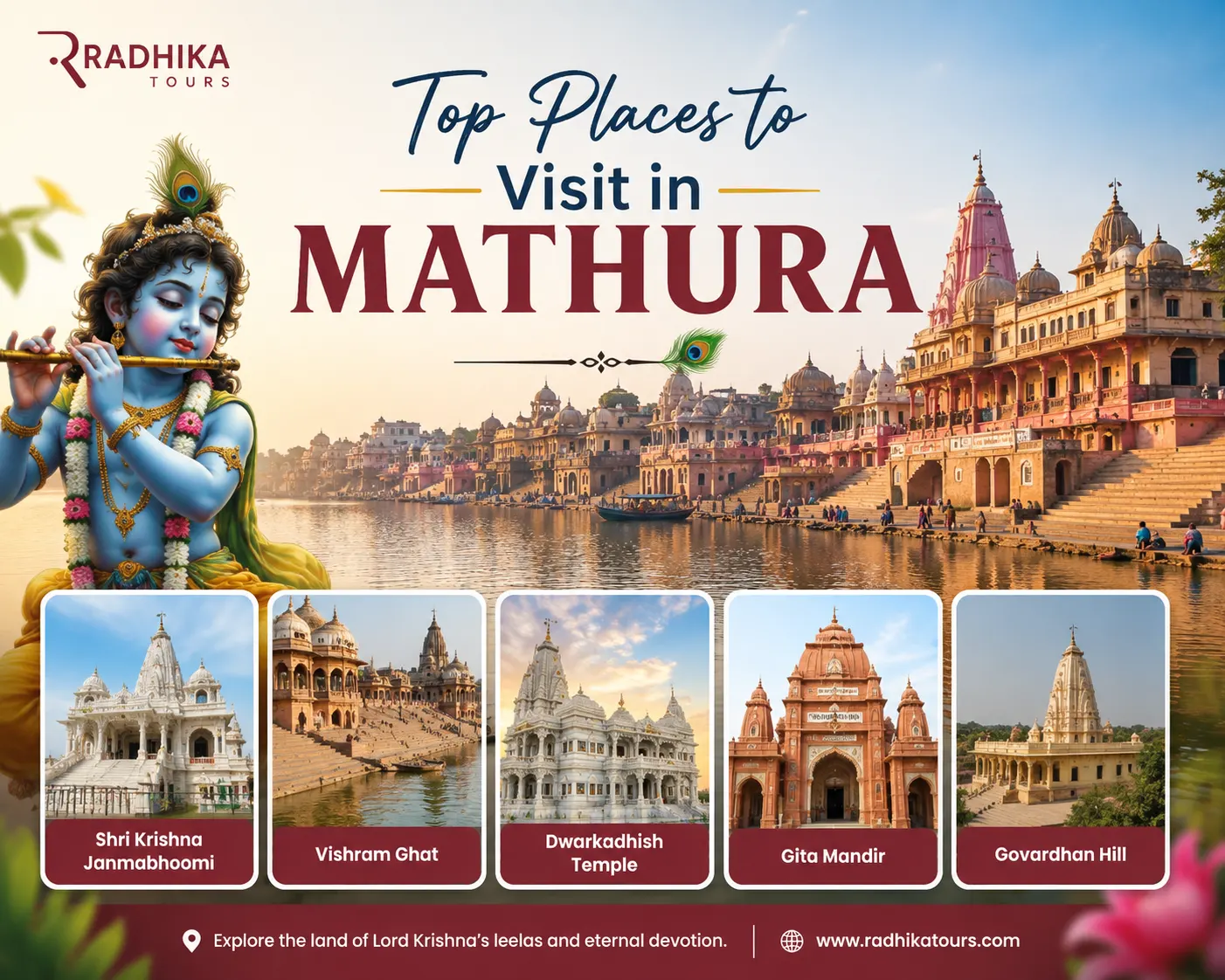 Places To Visit In Mathura Vrindavan[/caption]
1. Shri Krishna Janmabhoomi Temple
Significance: The holiest site in Mathura, believed to be the exact birthplace of Lord Krishna. The temple is built around the prison cell where Krishna's parents were imprisoned by his evil uncle Kansa.
What to See:
-
The Garbha Griha (sanctum sanctorum) marking Krishna's birthplace
-
Ancient sculptures and inscriptions
-
Vibrant temple complex with devotional chants
Timings: 5:00 AM–12:00 PM | 4:00 PM–9:30 PM
Entry Fee: Free (donations accepted)
Best Time to Visit: Early morning or evening for aarti; avoid midday crowds.
Distance from Mathura Junction: Approximately 1 km
Pro Tip: Photography is prohibited inside the sanctum. Dress modestly and remove footwear before entering.
2. Dwarkadhish Temple (Dwarkadheesh Mandir)
Significance: One of the oldest and largest temples in Mathura, dedicated to Lord Krishna as Dwarkadhish (King of Dwarka). Built in 1814, this temple is renowned for its elaborate architecture and colorful paintings.
What to See:
-
Black marble idol of Lord Dwarkadhish
-
Intricate carvings and murals depicting Krishna's life
-
Festive decorations during Janmashtami and Holi
Timings: 6:30 AM–10:30 AM | 4:00 PM–7:00 PM
Entry Fee: Free
Distance from Mathura Junction: Approximately 2 km
Pro Tip: Visit during evening aarti for a soul-stirring experience. The temple is especially beautiful during festivals.
3. Vishram Ghat
Significance: The most important ghat on the Yamuna River in Mathura, where Lord Krishna is believed to have rested (vishram) after defeating Kansa. It serves as the central point for the traditional parikrama (circumambulation) of 25 other ghats.
What to See:
-
Holy Yamuna waters for ritual bathing
-
Evening Yamuna Aarti (highly recommended)
-
Ancient temples and shrines surrounding the ghat
Timings: Open 24 hours; best time for aarti is sunset
Entry Fee: Free
Distance from Mathura Junction: Approximately 2 km
Pro Tip: Take a boat ride on the Yamuna during sunrise or sunset for breathtaking views.
4. Kans Qila (Kansa's Fort)
Significance: An ancient fortress on the banks of the Yamuna, linked to the story of King Kansa, Krishna's maternal uncle. The fort stands as a reminder of Mathura's historic past and the tyrannical rule of Kansa.
What to See:
-
Ruins of the ancient fort structure
-
Fusion of Hindu-Islamic architecture
-
Scenic views of the Yamuna River
Timings: 6:00 AM–6:00 PM (approximate)
Entry Fee: Minimal or free
Distance from Mathura Junction: Approximately 2 km
Pro Tip: Though in a dilapidated state, the fort offers historical insights and photo opportunities. Combine your visit with nearby Krishna Ganga Ghat.
5. Gita Mandir (Birla Mandir)
Significance: A prominent Hindu pilgrimage site dedicated to Lord Lakshmi Narayan, also known as Gita Mandir due to the entire Bhagavad Gita inscribed on its walls. Built by the Birla family, it features red sandstone architecture.
What to See:
-
Exquisite carvings and paintings
-
Inscriptions of the Bhagavad Gita on temple walls
-
Peaceful atmosphere for meditation
Timings: 6:00 AM–12:00 PM | 4:00 PM–8:00 PM (approximate)
Entry Fee: Free
Distance from Mathura Junction: Approximately 2 km
Pro Tip: Ideal for those seeking spiritual wisdom and architectural beauty.
6. Mathura Museum (Government Museum)
Significance: One of India's finest archaeological museums, housing ancient relics, sculptures, coins, and paintings from the Mathura School of Art (3rd century BC to 12th century AD). Initially known as the Curzon Museum of Archaeology, it was founded in 1874.
What to See:
-
Ancient Buddhist, Hindu, and Jain sculptures
-
Terracotta artifacts and coins
-
Paintings and inscriptions from the Kushan and Gupta periods
Timings: 10:00 AM–5:00 PM (closed on Mondays)
Entry Fee: ₹20–₹50 for Indians; higher for foreigners
Distance from Mathura Junction: Approximately 1 km
Pro Tip: Allocate at least 1–2 hours for a thorough exploration. Perfect for history enthusiasts.
7. Potara Kund
Significance: One of the four sacred kunds (water tanks) in Mathura, where baby Krishna's clothes were washed during his childhood. Constructed in red sandstone with steps descending into the water.
What to See:
-
Sacred water tank with ritual bathing
-
Ancient architectural design
-
Surrounding temples and shrines
Timings: 5:00 AM–9:00 PM (approximate)
Entry Fee: Free
Distance from Mathura Junction: Approximately 1 km
Pro Tip: Take a holy dip if you're a devotee; otherwise, admire the architecture and spiritual ambiance.
8. Jama Masjid Mathura
Significance: A historic mosque constructed in 1661 by Abd-un-Nabi Khan, the Governor of Aurangzeb. Despite Mathura's predominantly Hindu identity, this mosque reflects the region's composite cultural heritage.
What to See:
-
Four towering minarets
-
Mosaic plastering and intricate carvings
-
Blend of Mughal and local architectural styles
Timings: Open for prayers; non-Muslims may visit outside prayer times
Entry Fee: Free
Distance from Mathura Junction: Approximately 2 km
Pro Tip: Dress conservatively and respect religious sentiments. A unique architectural landmark in Mathura.
9. Tilak Dwar (Holi Gate)
Significance: A bustling local market surrounding the Dwarkadhish Temple and Vishram Ghat, famous for souvenirs, handicrafts, and religious items.
What to See:
-
Brass statues, rosary beads, and handicrafts
-
Hand-embroidered items and paintings
-
Affordable shopping for pilgrims
Timings: 9:00 AM–9:00 PM (market hours)
Entry Fee: Free (shopping costs vary)
Distance from Mathura Junction: Approximately 1 km
Pro Tip: Bargain politely for the best deals. Ideal for buying souvenirs and gifts.
10. Bhuteshwar Mahadev Mandir
Significance: A revered Shiva temple in Garravkendra, Mathura, also recognized as a Shaktipeeth where a ringlet of Mata Sati fell. Unique as one of the few non-Krishna temples in the city.
What to See:
-
Ancient Shiva lingam
-
Sacred Shaktipeeth status
-
Peaceful spiritual environment
Timings: 5:00 AM–12:00 PM | 4:00 PM–9:00 PM (approximate)
Entry Fee: Free
Distance from Mathura Junction: Approximately 4 km
Pro Tip: Visit during Maha Shivaratri for special celebrations.
Top Places to Visit in Vrindavan
[caption id="attachment_852" align="alignnone" width="1402"]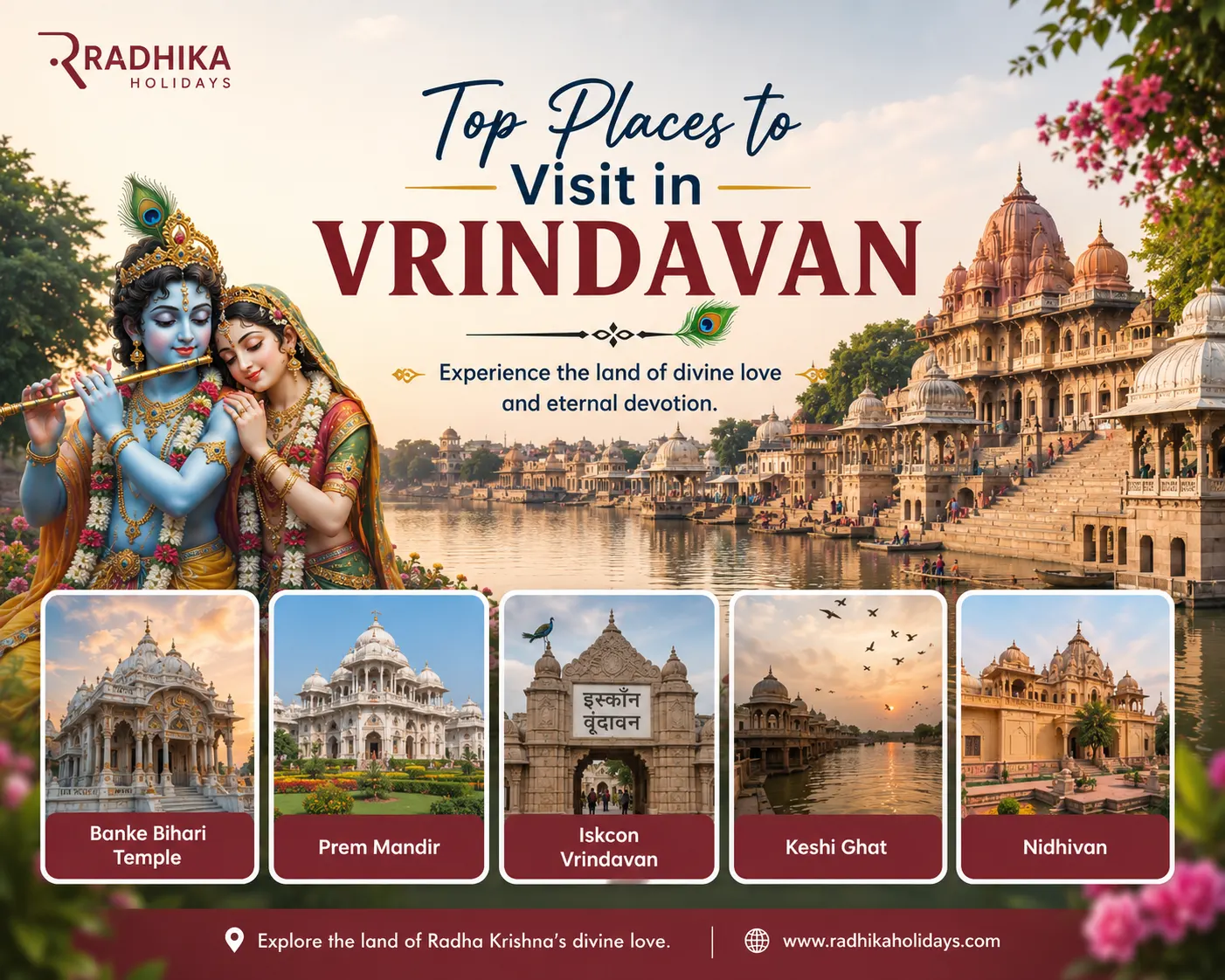 Places To Visit In Vrindavan[/caption]
11. Banke Bihari Temple
Significance: The most famous temple in Vrindavan, dedicated to Banke Bihari (the child form of Krishna). The temple's atmosphere is filled with devotion, joy, and the unique tradition where the deity's eyes are kept partially closed.
What to See:
-
Exquisite idol of Banke Bihari
-
Devotional kirtans and bhajans
-
Vibrant festival celebrations
Timings: 7:45 AM–12:00 PM | 5:30 PM–9:30 PM
Entry Fee: Free
Distance from Mathura: Approximately 15 km
Pro Tip: Arrive early to avoid long queues. The evening aarti is particularly enchanting.
12. ISKCON Temple (Krishna-Balaram Mandir)
Significance: The first temple constructed by the International Society for Krishna Consciousness (ISKCON), established in 1975. A global spiritual hub with white marble architecture and soulful kirtans.
What to See:
-
White marble temple complex
-
Idols of Krishna, Balaram, Radha, and Govinda
-
Cultural programs and vegetarian dining
Timings: 4:30 AM–1:00 PM | 4:00 PM–8:30 PM
Entry Fee: Free
Distance from Mathura: Approximately 12–15 km
Pro Tip: Attend the morning or evening aarti for a deeply spiritual experience. The temple offers free prasadam (sacred food).
13. Prem Mandir
Significance: A modern architectural marvel built with Italian white marble, illuminated beautifully at night. Constructed by Jagadguru Kripalu Parishat in 2001, it depicts Krishna's divine leelas through exquisite carvings.
What to See:
-
Stunning white marble architecture
-
Light and sound shows depicting Krishna's life
-
Serene gardens and fountains
Timings: 8:30 AM–12:00 PM | 4:30 PM–8:30 PM
Entry Fee: Free
Distance from Mathura: Approximately 12–15 km
Pro Tip: Visit after sunset to see the temple illuminated. The light show is mesmerizing.
14. Radha Raman Temple
Significance: A 16th-century temple where the self-manifested deity of Krishna, Radha Raman, is worshipped. One of the seven temples of Thakur of Vrindavan, it epitomizes the sacred love of Radha and Krishna.
What to See:
-
Ancient self-manifested deity
-
Unique worship style without a separate Radha idol (crown signifies her presence)
-
Historical inscriptions and architecture
Timings: 6:00 AM–12:30 PM | 4:00 PM–8:30 PM (approximate)
Entry Fee: Free
Distance from Mathura: Approximately 12–15 km
Pro Tip: A treasure for spiritual travelers seeking authentic Vaishnavite traditions.
15. Nidhivan (Seva Kunj)
Significance: A mystical grove believed to be the place where Radha-Krishna perform their divine Ras Leela even today. No one is allowed to stay inside after dusk, adding to its mystery and charm.
What to See:
-
Sacred tulsi plants and forest area
-
Temples and shrines within the grove
-
Evening aarti and devotional singing
Timings: 8:00 AM–12:00 PM | 4:00 PM–8:00 PM
Entry Fee: Free
Distance from Mathura: Approximately 12–15 km
Pro Tip: Visit during the day; exiting before sunset is mandatory. Respect the sanctity of the place.
16. Keshi Ghat
Significance: Located on the banks of the Yamuna, this ghat is associated with the legend of Krishna slaying the demon Keshi. A serene spot for ritual bathing and meditation.
What to See:
-
Holy Yamuna ghats
-
Ancient temples and shrines
-
Peaceful riverside ambiance
Timings: Open 24 hours; best during sunrise/sunset
Entry Fee: Free
Distance from Mathura: Approximately 12–15 km
Pro Tip: Ideal for quiet contemplation and photography. Combine with nearby Radha Madan Mohan Temple.
17. Radha Madan Mohan Temple
Significance: One of the oldest and most revered temples in Vrindavan, dedicated to Radha and Madan Mohan (Krishna). Established in the 16th century, it holds deep historical and spiritual significance.
What to See:
-
Ancient deities of Radha and Madan Mohan
-
Intricate carvings and historical architecture
-
Devotional atmosphere
Timings: 6:00 AM–12:00 PM | 4:00 PM–8:00 PM (approximate)
Entry Fee: Free
Distance from Mathura: Approximately 12–15 km
Pro Tip: Visit early morning for a peaceful darshan.
18. Shri Rang Nath Ji Temple
Significance: A South Indian-style temple dedicated to Lord Ranganatha (an incarnation of Krishna) and Goddess Goda (Andal). Unique for its idol of Krishna as a bridegroom with Goda as his bride.
What to See:
-
Distinctive Dravidian architecture
-
Beautiful idol of Krishna and Goda
-
Peaceful temple complex
Timings: 6:00 AM–12:00 PM | 4:00 PM–8:00 PM (approximate)
Entry Fee: Free
Distance from Mathura: Approximately 10–12 km
Pro Tip: A refreshing architectural contrast to other Vrindavan temples.
19. Vaishno Devi Dham (Vrindavan)
Significance: A temple dedicated to Ma Vaishno Devi, established by Shri J.C. Chaudhry. Pilgrims worship the magnificent idol and participate in charitable activities.
What to See:
-
Idol of Ma Vaishno Devi
-
Cave with water leading to the deity
-
Community service initiatives
Timings: 5:00 AM–12:00 PM | 4:00 PM–9:00 PM (approximate)
Entry Fee: Free
Distance from Mathura: Approximately 12–15 km
Pro Tip: Ideal for devotees of Vaishno Devi who cannot travel to Jammu.
20. Pagal Baba Mandir
Significance: A unique temple associated with the saint Pagal Baba, known for his unconventional teachings and miracles. Attracts devotees seeking blessings for personal challenges.
What to See:
-
Shrine of Pagal Baba
-
Devotional gatherings
-
Unique spiritual practices
Timings: Varies; check locally
Entry Fee: Free
Distance from Mathura: Approximately 12–15 km
Pro Tip: Timings may change; verify locally before visiting.
Beyond Mathura and Vrindavan: Must-Visit Places in the Braj Region
21. Govardhan Hill (Giriraj Ji)
Significance: Located 22 km from Vrindavan, this sacred hill is believed to be non-different from Krishna himself, as stated in the Bhagavad Gita. Devotees worship the pure rocks of the hill as they would worship Krishna's idol.
What to See:
-
80-ft tall sandstone hill with 38 km circumference
-
Mansi Ganga, Mukharvind, and Daan Ghati
-
Annual Govardhan Puja celebrations
Timings: 4:00 AM–10:00 AM | 4:00 PM–9:00 PM (for parikrama)
Entry Fee: Free
Distance from Mathura: Approximately 23 km
Pro Tip: Complete the 21-km parikrama (circumambulation) on foot for spiritual merit.
22. Radha Kund and Shyam Kund
Significance: Two holy water tanks near Govardhan Hill, considered the supreme of all holy places in Braj. The sacred water is believed to have healing properties, especially for conception.
What to See:
-
Sacred bathing ghats
-
Surrounding temples and ashrams
-
Peaceful spiritual ambiance
Timings: 4:00 AM–10:00 AM | 4:00 PM–9:00 PM
Entry Fee: Free
Distance from Mathura: Approximately 18 km
Pro Tip: Take a holy dip for spiritual purification. Best visited early morning.
23. Kusum Sarovar
Significance: A beautiful reservoir between Govardhan and Radha Kund, fringed by palatial sandstone buildings from the Mughal era. Named after Kusum, one of Radha's attendants.
What to See:
-
Scenic water body with steps for bathing
-
Ancient temples and ashrams nearby
-
Boating opportunities
Timings: 6:00 AM–6:00 PM (approximate)
Entry Fee: Free (boating charges may apply)
Distance from Mathura: Approximately 19 km
Pro Tip: Ideal for family outings and photography. Try boating for a unique experience.
24. Gokul (Gokulnath Temple and Raman Reti)
Significance: Where Krishna spent his early childhood after being brought from Mathura. Gokulnath Temple and Raman Reti (sacred sand) are major attractions.
What to See:
-
Gokulnath Temple
-
Raman Reti (sacred sand dunes)
-
Brahmand Ghat and 84 Khamba Mandir
Timings: 6:00 AM–8:00 PM (approximate)
Entry Fee: Free
Distance from Mathura: Approximately 15 km
Pro Tip: Visit Raman Reti early morning to avoid crowds. The sand is considered sacred.
25. Barsana (Radha Rani Temple)
Significance: The birthplace of Radha Rani, located in the Braj region. Famous for the vibrant Lathmar Holi festival, where women playfully strike men with sticks.
What to See:
-
Radha Rani Temple atop Bhanugarh Hill
-
Kirti Mandir and Sankari Khor
-
Lathmar Holi celebrations (seasonal)
Timings: 5:00 AM–12:00 PM | 4:00 PM–9:00 PM
Entry Fee: Free
Distance from Mathura: Approximately 35 km
Pro Tip: Visit during Lathmar Holi (a week before Holi) for a unique cultural experience.
26. Nandgaon (Shri Nand Baba Mandir)
Significance: The home of Krishna's foster parents, Nanda and Yashoda. Located at the base of Nandisvara Hill, it holds immense religious significance.
What to See:
-
Shri Nand Baba Mandir
-
Pavan Sarovar
-
Scenic hilltop views
Timings: 5:00 AM–9:00 PM (approximate)
Entry Fee: Free
Distance from Mathura: Approximately 40 km
Pro Tip: Combine with Barsana for a complete Braj experience.
27. Dauji Mandir (Balaram Temple)
Significance: One of the oldest temples in Mathura, standing for over 5000 years since 1535 AD. Dedicated to Lord Balarama, Krishna's elder sibling.
What to See:
-
Ancient Balarama deity
-
Historical architecture
-
Devotional gatherings
Timings: 5:00 AM–12:00 PM | 4:00 PM–9:00 PM (approximate)
Entry Fee: Free
Distance from Mathura Junction: Approximately 2 km
Pro Tip: A must-visit for devotees of Balarama.
28. Chamunda Devi Temple
Significance: One of the 51 Shakti Peethas, where a hair strand of Mother Bhagwati Jagdamba is believed to have fallen. Krishna is said to have visited after liberating the dragon.
What to See:
-
Sacred Shaktipeeth shrine
-
Devotional atmosphere
-
Historical significance
Timings: 5:00 AM–9:00 PM (approximate)
Entry Fee: Free
Distance from Mathura Junction: Approximately 3 km
Pro Tip: Visit during Navratri for special celebrations.
29. Gopeshvar Mahadev Temple
Significance: A unique Shiva temple in Vrindavan where the deity is decorated as a female friend (sakhi) of Krishna. Popular among devotees seeking blessings for relationships.
What to See:
-
Uniquely adorned Shiva lingam
-
Peaceful temple complex
-
Devotional practices
Timings: 6:00 AM–8:00 PM (approximate)
Entry Fee: Free
Distance from Mathura: Approximately 12–15 km
Pro Tip: A unique temple blending Shaiva and Vaishnava traditions.
30. Shri Nand Yashoda Bhawan (Chaurasi Khamba Mandir)
Significance: Krishna's childhood home in Gokul, where he spent time with Balarama. Also known as the 84 Pillar Temple due to its architectural design.
What to See:
-
84-pillar structure
-
Birthplace of Krishna's foster family
-
Ancient inscriptions and artifacts
Timings: 6:00 AM–8:00 PM (approximate)
Entry Fee: Free
Distance from Mathura: Approximately 7 km
Pro Tip: Combine with other Gokul attractions for a comprehensive visit.
Best Time to Visit Mathura and Vrindavan
The ideal time to visit Mathura and Vrindavan is from October to March, when the weather is pleasant and conducive for temple hopping and outdoor activities.
Seasonal Highlights:
-
Winter (November–February): Cool and comfortable; perfect for parikrama and sightseeing.
-
Spring (March): Holi celebrations, especially Lathmar Holi in Barsana and Nandgaon.
-
Monsoon (July–September): Lush greenery but occasional rainfall; Janmashtami (August/September) is a major draw.
-
Summer (April–June): Hot and humid; avoid if possible, but early morning visits are manageable.
Major Festivals:
-
Janmashtami (August/September): Krishna's birthday; grand celebrations at Krishna Janmabhoomi.
-
Holi (March): Lathmar Holi in Barsana and Nandgaon; vibrant celebrations across the region.
-
Govardhan Puja (October/November): Worship of Govardhan Hill; massive parikrama.
-
Radhashtami (August/September): Celebrates Radha's birth; special events in Barsana.
How to Reach Mathura and Vrindavan
By Air:
-
Nearest Airport: Agra Airport (60 km) or Indira Gandhi International Airport, Delhi (150 km).
-
From Airport: Hire a taxi or take a train/bus to Mathura.
By Train:
-
Mathura Junction: Well-connected to Delhi, Agra, Jaipur, and major cities.
-
Vrindavan Road: A smaller station near Vrindavan.
By Road:
-
Delhi to Mathura: 150 km via NH19/Yamuna Expressway (3–4 hours).
-
Agra to Mathura: 60 km (1.5 hours).
-
Buses and taxis are readily available from Delhi, Agra, and Jaipur.
Local Transport:
-
Auto-rickshaws, cycle-rickshaws, and local buses ply within Mathura and Vrindavan.
-
Private taxis and tour packages offer convenient Braj circuit coverage.
Travel Tips for Mathura and Vrindavan
Accommodation:
-
Options range from budget guest houses (₹500–₹1,500/night) to luxury hotels (₹3,000–₹6,000/night).
-
Dharamshalas and ashrams offer affordable or free stays for pilgrims.
-
Book in advance during festivals like Janmashtami and Holi.
Dress Code:
-
Dress modestly when visiting temples (covered shoulders and knees).
-
Remove footwear before entering temple premises.
-
Carry a scarf or shawl for aarti and religious ceremonies.
Safety and Etiquette:
-
Respect religious sentiments; avoid loud behavior in temples.
-
Photography may be prohibited in certain temple sanctums.
-
Beware of scams and overcharging; use authorized guides and transport.
Food and Dining:
-
Mathura and Vrindavan are predominantly vegetarian; many restaurants serve pure vegetarian food.
-
Try local specialties like pedas (Mathura's famous sweet), chaat, and thali meals.
-
ISKCON and other temples offer free or low-cost prasadam.
Health and Hygiene:
-
Drink bottled or filtered water.
-
Carry basic medications for heat, digestion, and allergies.
-
Use hand sanitizers and maintain hygiene, especially during crowded festivals.
Budget Estimates (Per Person):
-
Accommodation: ₹500–₹3,000/night
-
Food: ₹200–₹500/day
-
Transport: ₹500–₹1,500/day (local and intercity)
-
Temple Donations: Optional (₹50–₹500)
-
Total (3 days): ₹5,000–₹15,000 depending on choices
Suggested Itinerary for Mathura and Vrindavan
3-Day Spiritual Journey
Day 1: Mathura
-
Morning: Krishna Janmabhoomi Temple, Dwarkadhish Temple, Mathura Museum
-
Afternoon: Vishram Ghat, Kans Qila, Gita Mandir
-
Evening: Yamuna Aarti at Vishram Ghat, Tilak Dwar shopping
Day 2: Vrindavan
-
Morning: Banke Bihari Temple, ISKCON Temple, Radha Raman Temple
-
Afternoon: Prem Mandir, Nidhivan, Keshi Ghat
-
Evening: Light show at Prem Mandir, Rang Nath Ji Temple
Day 3: Braj Circuit
-
Morning: Govardhan Hill parikrama, Radha Kund and Shyam Kund
-
Afternoon: Kusum Sarovar, Gokul (Raman Reti, Nand Bhawan)
-
Evening: Barsana (Radha Rani Temple) or Nandgaon
5-Day Extended Tour
Day 1–2: Mathura and Vrindavan (as above)
Day 3: Govardhan, Radha Kund, Kusum Sarovar, Gokul
Day 4: Barsana, Nandgaon, Kokilavan
Day 5: Relaxation, shopping, revisit favorite temples
Accommodation Recommendations
Luxury:
-
The Lalita Grand, Vrindavan: Spacious rooms, in-house dining, easy access to temples.
-
Nidhivan Sarovar Portico, Vrindavan: Modern amenities, proximity to Banke Bihari Temple.
Mid-Range:
-
Hotel Vishram Palace, Mathura: Comfortable rooms, near Krishna Janmabhoomi.
-
MVT Guest House, Vrindavan: Affordable, vegetarian meals, spiritual ambiance.
Budget:
-
Dharamshalas and Ashrams: Free or low-cost stays; basic facilities.
-
OYO Hotels: Multiple options from ₹500–₹1,500/night.
Pro Tip: Stay in Vrindavan for easy access to both cities; Mathura is a short auto-rickshaw or taxi ride away.
Frequently Asked Questions (FAQs)
Q: What are the top places to visit in Mathura and Vrindavan?
A: The top attractions include Krishna Janmabhoomi Temple, Dwarkadhish Temple, Vishram Ghat, Banke Bihari Temple, ISKCON Temple, Prem Mandir, Nidhivan, Govardhan Hill, and Radha Kund.
Q: How many days are needed to explore Mathura and Vrindavan?
A: A minimum of 2–3 days is recommended for a comprehensive visit; 5 days allows for a relaxed Braj circuit tour.
Q: Is Mathura and Vrindavan safe for solo travelers and families?
A: Yes, the region is generally safe, but standard precautions (avoiding isolated areas at night, using authorized transport) are advised.
Q: Can I visit Mathura and Vrindavan on a budget?
A: Absolutely. Budget-friendly dharamshalas, vegetarian eateries, and free temple entry make it accessible for all.
Q: What is the best way to travel between Mathura and Vrindavan?
A: Auto-rickshaws, taxis, and local buses are readily available; the distance is approximately 15 km (30–45 minutes).
Q: Are there any entry fees for temples?
A: Most temples are free; some may request donations. Museums and certain attractions may charge nominal fees.
Q: What should I buy in Mathura and Vrindavan?
A: Mathura pedas, religious souvenirs, brass statues, handicrafts, and devotional items are popular purchases.
Q: Can I complete the Govardhan parikrama in one day?
A: Yes, the 21-km parikrama can be completed in 5–7 hours on foot or by bicycle.
Q: What is Lathmar Holi?
A: A unique Holi celebration in Barsana and Nandgaon where women playfully strike men with sticks (lathis) a week before the main Holi festival.
Q: Are there any restrictions for photography?
A: Yes, photography is often prohibited inside temple sanctums; always check with authorities.
Book More Tours: 2 Nights 3 Days Golden Triangle Tour , Same Day Agra Tour With Fatehpur Sikri