
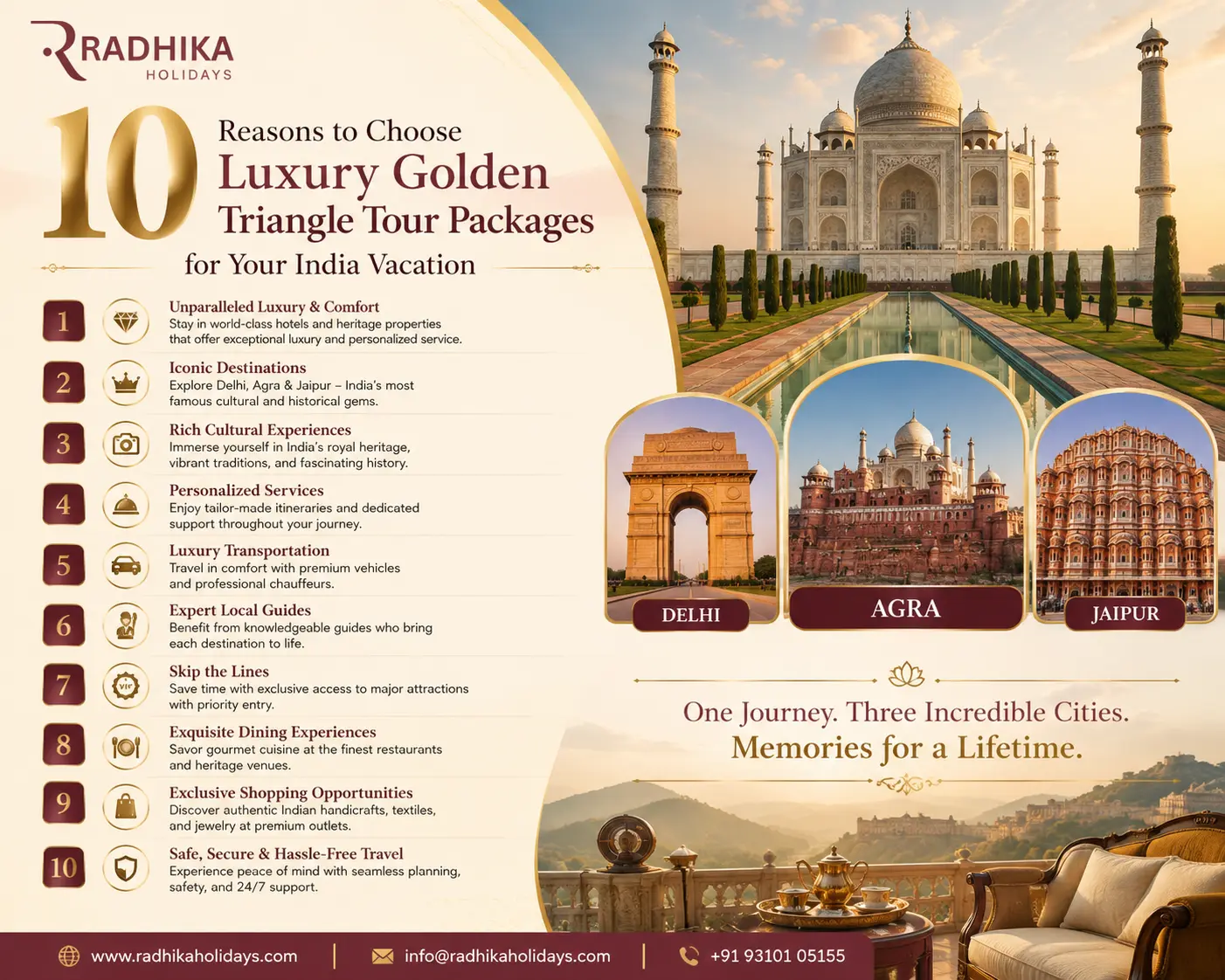
A Luxury Golden Triangle Tour Packages covers Delhi, Agra, and Jaipur with private guides, palace-hotel stays (such as The Oberoi Amarvilas, Rambagh Palace, or ITC properties), skip-the-line monument access, and door-to-door private transport — typically over 5 to 9 days. Compared to independent travel, it saves 10–15 hours of logistics planning, secures sunrise Taj Mahal slots that sell out weeks ahead, and includes 24/7 on-ground support. Packages start around ₹35,000–₹50,000 per person for 5 days in shared 5-star category, rising to ₹1,50,000+ per person for palace-hotel and wildlife-safari add-ons.
Why the Golden Triangle Remains India's Top Circuit
Delhi, Agra, and Jaipur form a triangle you can drive between in under six hours each way, yet the three cities feel like three different centuries. Delhi carries Mughal ruins beside Lutyens-era boulevards. Agra holds the Taj Mahal and Agra Fort. Jaipur, the Pink City, blends Rajput forts with living bazaars. Because the distances are short and the sites are UNESCO-dense, it's the most efficient historical circuit in India — and the easiest one to elevate with a luxury package.
Here are 10 reasons a Luxury Golden Triangle Package is worth booking over a self-planned trip.
1. Every Logistic Is Handled Before You Land
Luxury operators arrange airport pickup, inter-city transfers (private car, train, or short domestic flight), hotel check-ins, and monument permits in advance. You're not comparing train classes on IRCTC or negotiating a driver at 6 a.m. — a vetted chauffeur and English-speaking guide are simply waiting.
What to check: Confirm whether transfers are by private AC vehicle (Toyota Innova/Crysta class) or shared coach — this is the single biggest luxury-vs-budget differentiator in most itineraries.
2. Palace and Heritage Hotel Stays, Not Just "5-Star"
This is where named properties matter. Luxury Golden Triangle packages typically place you at:
- Delhi: The Oberoi New Delhi, The Leela Palace, or ITC Maurya
- Agra: The Oberoi Amarvilas (unobstructed Taj Mahal views from the room) or ITC Mughal
- Jaipur: Rambagh Palace, The Oberoi Rajvilas, or Taj Jai Mahal Palace
These aren't interchangeable "luxury hotel" placeholders — the Amarvilas specifically is built within view of the Taj Mahal's outer walls, which is why it commands a premium over any other Agra property.
3. Private, Licensed Guides Who Know the Access Windows
A generic ticket gets you into the Taj Mahal. A private guide gets you there at the correct sunrise slot (gates open 6 a.m., peak light window is roughly 6:30–7:15 a.m.), knows which side gate has shorter queues, and can arrange the Mehtab Bagh sunset viewpoint across the river for the moonlit reflection shot. The same applies at Amber Fort, where guides can route you to the Sheesh Mahal and Sukh Niwas before tour-bus crowds arrive.
4. Signature Experiences You Can't Book Yourself
The best luxury itineraries build in access that isn't available on standard tickets:
- Sunrise or moonlight Taj Mahal viewing from Mehtab Bagh
- A Jhalana Leopard Safari near Jaipur (leopard sightings are common, unlike the more famous but crowded Ranthambore)
- Elephant or jeep access up to Amber Fort
- Block-printing or blue-pottery artisan workshops in Jaipur
- Evening Kalbelia folk dance or a private dinner at a restored haveli
5. Itinerary Lengths Matched to How Much You Actually Want to See
| Duration | Best for | Typical additions |
|---|---|---|
| 3–4 days | First-time visitors, short layovers | Core monuments only |
| 5–7 days | Most travelers | Fatehpur Sikri stop, Jhalana leopard safari |
| 8–10 days | Slower pace, multi-generational trips | Ranthambore tiger safari, Udaipur or Jodhpur extension |
Longer isn't automatically better — a 5-day package with a Fatehpur Sikri stop and one buffer afternoon typically beats a rushed 3-day version on comfort per rupee spent.
6. Safety and Accountability Built Into the Contract
Private transfers with named, background-checked drivers reduce the common independent-travel risks (unlicensed taxis, unverified guides at monument gates). Reputable operators also spell out cancellation windows, weather-contingency plans (fog delays are common in Delhi/Agra in December–January), and a 24/7 emergency contact — details worth confirming before you book, not after.
7. Food and Culture Access Beyond the Standard Buffet
Instead of a hotel breakfast buffet every meal, luxury packages can include a chef-led thali experience, dinner at a restored haveli, or a home-hosted meal in Jaipur's old city. Cultural add-ons — a private Chandni Chowk food walk, a classical music evening, or a City Palace museum tour with a royal-family historian — are arranged through local partners the operator already vets.
8. The Real Value Is Time and Access, Not Just Comfort
A luxury package often costs 2–4x a budget group tour. What that premium actually buys: guaranteed sunrise Taj Mahal slots (regular queues can run 45–90 minutes), a private vehicle instead of a shared coach with fixed stop times, and same-day itinerary flexibility if you want to linger at one site and skip another.
9. Built for Special Occasions and Mixed-Age Groups
Anniversary trips, honeymoons, and family groups with grandparents benefit from private pacing — no group waiting on the slowest walker, no fixed lunch time. Palace hotels also tend to have larger connecting rooms and on-call medical assistance, which matters more than it sounds for older travelers on a hot Rajasthan afternoon.
10. A Growing Number of Operators Now Build in Responsible Tourism
Look for operators who name specific community partnerships — artisan cooperatives paid directly, guides hired locally rather than flown in, and hotels with visible sustainability certifications (many Oberoi and Taj properties publish these). This is worth asking about directly; not every "luxury" label includes it.
Sample 5-Day Luxury Golden Triangle Itinerary
Day 1 — Delhi: Private airport pickup, check-in at The Leela Palace or The Oberoi New Delhi. Evening at leisure or a private Chandni Chowk food walk.
Day 2 — Delhi to Agra: Morning tour of Humayun's Tomb, Qutub Minar, and Red Fort with a private guide. Afternoon transfer to Agra (car or Gatimaan Express train, ~2 hours). Check into The Oberoi Amarvilas.
Day 3 — Agra to Jaipur: Sunrise Taj Mahal visit (6:30 a.m. gate entry), followed by Agra Fort. En route to Jaipur, stop at Fatehpur Sikri. Check into Rambagh Palace.
Day 4 — Jaipur: Amber Fort with jeep or elephant access, City Palace, Hawa Mahal, and Jantar Mantar. Optional afternoon Jhalana Leopard Safari or block-printing workshop.
Day 5 — Departure: Free morning for shopping in Jaipur's bazaars, then private transfer to Jaipur or Delhi airport.
Frequently Asked Questions
How many days do I need for a luxury Golden Triangle tour?
Most travelers are comfortable with 5 to 7 days. Three days covers the core monuments but feels rushed; 8 to 10 days allows a Ranthambore or Udaipur extension.
What's included in a luxury Golden Triangle package?
Typically: private airport transfers, a private vehicle for the full circuit, English-speaking licensed guides, palace or 5-star hotel stays, daily breakfast, and monument entry fees. Meals beyond breakfast, domestic flights, and elephant/safari add-ons are usually quoted separately.
Is a luxury Golden Triangle tour worth the extra cost over a standard package?
If guaranteed sunrise Taj Mahal access, a private (not shared) vehicle, and named heritage-hotel stays matter to you, yes — those are the specific differences you're paying for, not just "nicer rooms."
When is the best time to book?
October through March is peak season for weather and demand. Palace hotels and sunrise Taj Mahal slots can sell out 4–6 weeks in advance during this window.
Can the itinerary include Ranthambore or Udaipur?
Yes — most operators offer 8 to 10-day extensions adding a Ranthambore tiger safari or an Udaipur lake-palace stop after Jaipur.